How to Soft Boil an Egg Perfectly (Stove, Air Fryer & Microwave)
Imagine peeling a warm shell to find firm whites and a beautiful, glowing golden core. Learning how to soft boil an egg perfectly changes your entire breakfast game. It can feel tricky when you first try it. Sometimes the center is too watery, or the shell refuses to come off without tearing. Luckily, anyone can learn how to soft boil an egg once they understand a few simple guidelines.
This deep-dive guide covers every single method imaginable. We will look at classic boiling, modern kitchen gadgets, and clever shortcuts. You do not need to be a professional chef to get amazing results. With the right tools and a little timing, you will master how to soft boil an egg every time.
Why Getting the Perfect Jammy Yolk Matters
A great breakfast is all about the textures you combine on your plate. A firm white holds its shape, while a liquid center acts like a rich, velvety sauce. When you learn how to soft boil an egg perfect method style, you upgrade simple toast into a fancy meal. The rich yolk adds depth and luxury to anything it touches.
Many people struggle because a few seconds can completely alter the results. Understanding heat transfer helps you avoid tough, rubbery whites or cold, raw yolks. Once you practice a couple of times, it becomes second nature. You will quickly discover that making this comfort food is incredibly satisfying and easy.
How to Soft Boil an Egg Perfect Method on the Stove
The traditional stove approach remains the absolute gold standard for home cooks. First, bring a pot of water to a roaring boil over high heat. Make sure there is enough liquid to submerge your food completely. Using a large spoon, gently lower your cold ingredients into the bubbling water so they do not crack.
Adjust your heat to keep a steady, gentle simmer rather than a violent boil. Cook for exactly six minutes if you love a runny center. If you want a slightly thicker, jammy texture, leave them in for six and a half minutes. Always use a digital timer on your phone for total accuracy.
The Secret Trick to Making Them Easy to Peel
Nothing ruins your morning faster than a shell that sticks to the egg white. The absolute best way to prevent this is by using an ice bath. While your food cooks, fill a medium bowl with cold water and plenty of ice cubes. This cold shock stops the cooking process instantly.
The sudden temperature drop makes the internal contents shrink away from the outer shell. Leave them in the ice water for at least three minutes before handling. When you are ready, gently tap the bottom on your counter to break the air pocket. Peel under running water, and the shell will slide off effortlessly.
How to Soft Boil an Egg for Ramen at Home
If you love savory noodle bowls, you need to know how to soft boil an egg for ramen. The secret to those beautiful restaurant versions is a simple soy sauce marinade. Start by boiling your fresh ingredients for exactly six minutes so the center stays nice and liquid. Cool them completely in your ice bath and peel them carefully.
The Ultimate Izakaya Style Marinade Table
| Ingredient Type | Measurement | Purpose |
| Soy Sauce | 0.5 Cup | Provides deep umami flavor and dark color |
| Mirin | 0.5 Cup | Adds a gentle, distinct Japanese sweetness |
| Water | 1.5 Cups | Dilutes the mixture so it is not too salty |
| Fresh Garlic | 1 Crushed Clove | Infuses a delicious savory aroma |
Place your peeled ingredients into a zip-top bag with the liquid marinade. Let them sit in the refrigerator for at least four hours, or even overnight. The outside will turn a beautiful golden brown color, while the inside stays rich and creamy. It balances the warm, salty broth of your soup perfectly.
How to Soft Boil an Egg in an Air Fryer Quickly
Your air fryer is not just for cooking crispy french fries or chicken wings. It is actually an amazing tool for making breakfast without using any water at all. To learn how to soft boil an egg in an air fryer, start by preheating your machine to 270 degrees Fahrenheit. Place your ingredients straight from the fridge into the basket.
Cook them for eleven to twelve minutes depending on your specific appliance power. Because every machine behaves slightly differently, run a small test with just one item first. As soon as the timer goes off, drop it into ice water. This modern method is wonderfully hands-off and convenient.
Adjusting Times for How to Soft Boil an Egg in the Air Fryer
When exploring how to soft boil an egg in the air fryer, small adjustments change everything. A shorter cooking time of ten minutes gives you an ultra-runny texture. If you prefer a thicker, custard-like center, aim for twelve minutes instead. Never skip the ice bath when using this dry-heat method.
The internal temperature keeps rising rapidly even after you turn the machine off. Dunking them in cold water locks in that perfect, gooey texture you want. It is a fantastic option when your stove burners are completely busy with other dishes. You get repeatable, easy results without waiting for water to heat up.
Why People Love How to Soft Boil an Egg in Air Fryer Units
Many busy families swear by how to soft boil an egg in air fryer baskets every morning. You do not have to watch a pot or worry about water boiling over on your stove. You just set the digital timer, walk away, and listen for the beep. It saves precious time when you are rushing to get ready for school or work.
Clean-up is incredibly simple since there are no messy pots or mineral scales to scrub away. The circulating hot air heats everything evenly from every possible angle. It is a brilliant kitchen hack that makes a healthy breakfast feel completely effortless. Once you try it, you might never go back to the old way.
How to Soft Boil an Egg in the Microwave Safely
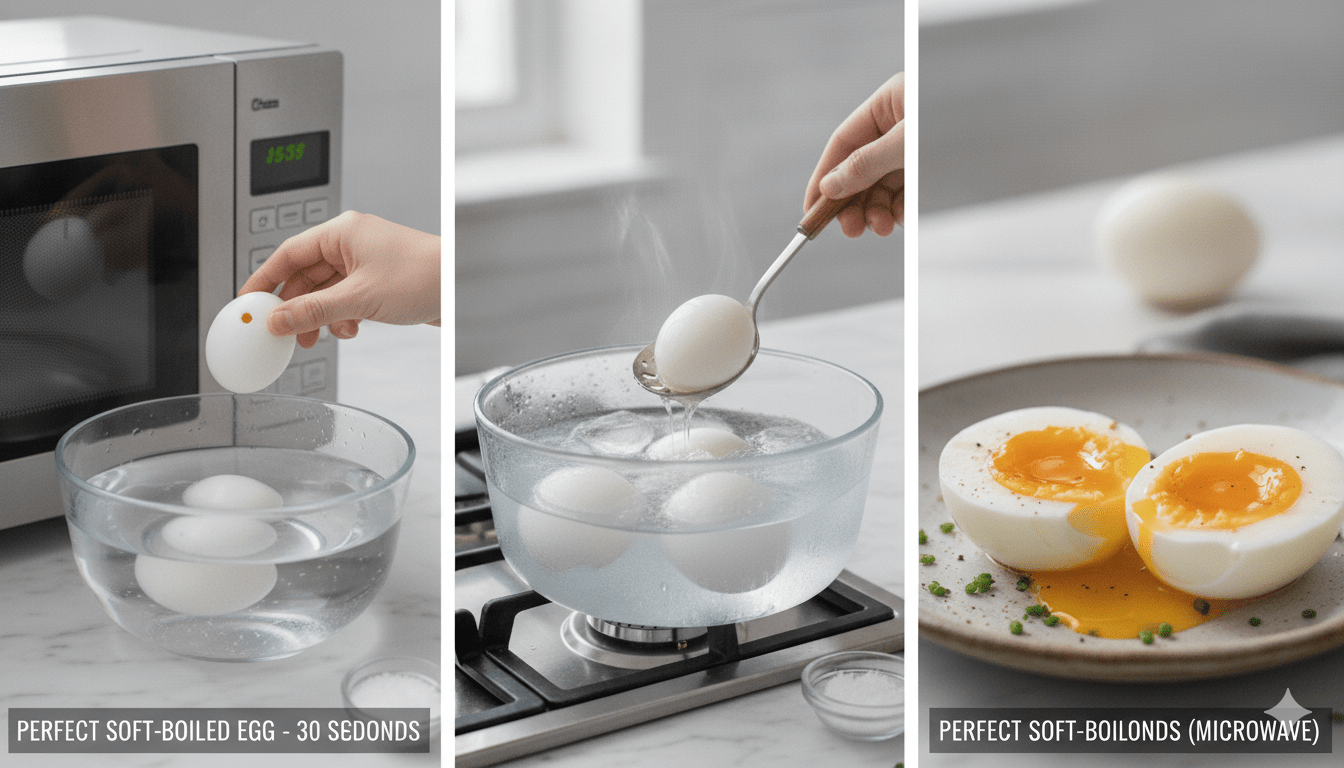
Can you actually use a microwave for this recipe without causing a giant mess? Yes, but you must follow safety rules so the shell does not explode from pressure. To master how to soft boil an egg in the microwave, you must submerge it completely in water inside a microwave-safe bowl.
Never heat it dry, or the steam buildup will crack the shell violently. Add a half teaspoon of salt to your water bowl before heating. The salt alters how the waves interact with the liquid, ensuring even cooking. This step protects your appliance and keeps your breakfast completely intact.
Step-by-Step for How to Soft Boil an Egg in Microwave Bowls
Let us look at the exact power settings for how to soft boil an egg in microwave ovens. Set your machine to 50 percent power instead of using full blast. Heating too fast will rubberize the whites and cook the center solid. Microwave your water-filled bowl with the egg inside for three to four minutes.
Keep a close eye on the window during the final seconds of cooking. Carefully remove the hot container using thick oven mitts. Transfer your food into ice water immediately to cool it down safely. It takes a little practice to match your specific microwave wattage perfectly.
How to Soft Boil an Egg for Ramen in Microwave Ovens
When you want a quick noodle bowl at work, learning how to soft boil an egg for ramen in microwave settings is a lifesaver. Use a deep mug filled with water to ensure full submersion. Cook at half power for three and a half minutes to get that signature soft center.
While it cools, prepare your instant noodle package according to the directions. Peel your hot food carefully and slice it cleanly in half over your soup bowl. The rich center will mingle beautifully with the hot, savory instant broth. It elevates a cheap college staple into a truly comforting meal.
Avoiding Common Mistakes with How to Soft Boil an Egg in a Microwave
The biggest mistake people make with how to soft boil an egg in a microwave is using full power. High settings heat the moisture inside the pocket too fast, causing loud pops. Always remember your salt and your low power settings every single time. Using a wide, deep ceramic bowl works best for stability.
If your appliance is extremely powerful, start with shorter two-minute bursts to test things out. It is better to undercook slightly than to create a messy cleanup situation. With a cautious approach, this method becomes a fast and valuable tool in your kitchen routine.
Choosing the Best Ingredients for Kitchen Success
The quality of your fresh ingredients directly changes your final breakfast experience. Fresh options from the local farm have beautiful, vibrant orange centers that look amazing. However, older store-bought options are actually much easier to peel after boiling. This happens because the internal pH changes over time.
If you have a special event, buy your cartons a week in advance. Store them safely in the coldest part of your refrigerator until you are ready. Size matters immensely when calculating your precise cooking times. All standard recipes assume you are using large sizes directly from the cold fridge.
Creative Ways to Serve Your Golden Creations
Once you master how to soft boil an egg, the fun part is deciding how to eat it. Slice them gently over fresh avocado toast with a sprinkle of red pepper flakes. Drop them into warm grain bowls filled with quinoa, roasted sweet potatoes, and fresh kale. They add instant protein and richness to any vegetable dish.
Chef’s Serving Tip: Try the classic British style by placing your food in a cute ceramic cup. Slice off the very top of the shell and season with sea salt. Serve with toasted bread strips called “soldiers” for dipping directly into the liquid gold center.
Summary of Cooking Times Across Different Methods
To help you choose the best cooking option for your busy morning, here is a quick summary of the times discussed in this guide.
- Classic Stove Method: 6 to 6.5 minutes in boiling water (most reliable, easiest to control).
- Air Fryer Method: 11 to 12 minutes at 270°F (completely hands-off, no water needed).
- Microwave Method: 3 to 4 minutes at 50% power, completely submerged in salted water (fastest shortcut).
Conclusion
Mastering how to soft boil an egg is a simple kitchen skill that brings massive rewards to your daily meals. Whether you stick to the time-tested stove method, embrace the hands-off air fryer technique, or use the quick microwave method for your morning ramen, consistency is your best friend. Remember to always use a precise timer and never skip the ice water bath if you want a frustration-free peeling experience.
FAQs
Can you store soft boiled eggs in the fridge for later?
Yes, you can store them in their shells for up to three days in a sealed container. Keep them chilled in the refrigerator, and do not peel them until you are ready to eat. You can warm them up gently by placing them in hot tap water for a few minutes before serving.
Why did my egg crack while boiling on the stove?
They usually crack because they were dropped too hard against the bottom of the metal pot. Another reason is the temperature shock of going from a cold fridge into violent bubbles. Always use a spoon to lower them gently, and keep the water at a gentle simmer instead of a wild boil.
Is it safe to eat a soft boiled egg with a runny yolk?
For most healthy people, eating clean, high-quality ingredients with a liquid center is completely safe. If you have a weak immune system, are pregnant, or are feeding toddlers, it is best to cook them fully. Always buy clean, uncracked items from trusted brands and keep them refrigerated.
How do I slice a soft boiled egg without making a huge mess?
Because the center is liquid, a regular dull knife will squeeze the yolk out sideways. Use a very sharp knife wiped with a little bit of warm water or cooking spray. Alternatively, use a clean piece of unflavored dental floss or a wire slicer to cut through perfectly without dragging.
What happens if I forget the ice bath step?
If you skip the cold shock, the heat trapped inside the shell will keep cooking the ingredients. Your perfect liquid center will quickly turn solid and chalky within a few minutes. The shell will also stick tightly to the whites, making it very frustrating to peel cleanly.
Does the altitude of my kitchen affect the cooking time?
Yes, water boils at a lower temperature when you live high up in the mountains. If your kitchen is located above 3,000 feet, you will need to add about 30 to 60 seconds to your stove times. It takes a little experimentation to find the perfect sweet spot for your local elevation.