What Happens When You Over Shock Your Pool and How to Fix It
Pool shocking is a standard maintenance task that every pool owner must learn.
The idea is simple: add a concentrated dose of chlorine or non-chlorine oxidizer to destroy contaminants, break down chloramines, and keep the water clear. But what happens when you add too much?
The short answer is that yes, you can over shock a pool, and the consequences range from minor discomfort to costly equipment damage.
Understanding the science behind pool shocking helps prevent mistakes. This article explains how over-shocking occurs, what signs to watch for, and how to restore balance when you have gone too far.
What Pool Shock Actually Does
Pool shock is a high-dose sanitizer treatment designed to raise free chlorine levels quickly so they can kill algae, bacteria, and chloramines.
In normal conditions, free chlorine should sit between 1 and 3 ppm.
Shocking temporarily pushes that number much higher so the chlorine can burn through contaminants and reset the water chemistry.
That process works well when done correctly. Problems arise when pool owners assume that more shock equals faster results. Pool chemistry does not work that way. Doubling or tripling the dose rarely solves the problem faster. It usually creates a new set of issues.
How Over-Shocking Happens
Several common mistakes lead to over-shocking. Misunderstanding the recommended dosage is the most frequent cause.
Most chlorine-based shocks recommend roughly 1 pound of granular shock per 10,000 gallons of water for a routine treatment.
Adding extra bags because the water looks cloudy or because you want to be safe pushes chlorine far beyond what is necessary.
Inaccurate pool volume estimates also contribute.
Many pool owners guess their pool size rather than measuring it.
A miscalculation of even a few thousand gallons can lead to a significant overdose.
Shocking too frequently without testing the water first is another factor.
Testing before each treatment tells you the current free chlorine level, combined chlorine level, and pH. Without that information, you are adding chemicals blindly.
Signs of an Over-Shocked Pool
Recognizing the symptoms of over-shocking helps you address the problem quickly.
The most obvious sign is a free chlorine reading above 10 ppm.
Most standard test kits max out at 5 ppm, so if your reading is off the chart, you have likely added too much.
Physical symptoms are also telling.
Swimmers may experience burning eyes, itchy or dry skin, and bleached swimsuits.
A strong chemical smell does not mean the water is clean.
It usually indicates high chlorine levels or a buildup of chloramines. Cloudy water after shocking is another red flag.
High chlorine can react with metals in the water, push pH out of range, or cause calcium to come out of solution.
What Happens When You Add Too Much Shock
Over-shocking creates several problems that go beyond simple discomfort. High chlorine levels can damage vinyl liners, automatic covers, pump seals, gaskets, heater components, and skimmer parts over time. Think of chlorine as bleach. A little helps sanitize. Too much starts breaking down materials.
Your water chemistry becomes unbalanced as well.
Many chlorine shocks have a high pH, so adding too much can push your pH out of the ideal range of 7.2 to 7.6.
This reduces chlorine effectiveness and makes the water uncomfortable for swimmers. Stabilized shocks like sodium dichlor increase cyanuric acid levels.
When CYA gets too high, chlorine becomes less effective, which creates a cycle where owners add more shock without getting results.
You also waste money.
Shock products are not free, and dumping extra bags because it feels right is one of the fastest ways to burn through your pool care budget.
Most over-shocking incidents are not caused by a real chlorine demand.
They are caused by incorrect pool volume estimates, poor circulation, dirty filters, high CYA, or algae that needs a full treatment plan.
How to Fix an Over-Shocked Pool
The good news is that over-shocking is usually fixable. Here are the most effective methods.
Wait It Out
Sunlight burns off chlorine naturally. Leave the pool uncovered, keep the pump running, and retest after a day or two. This works well when chlorine levels are high but not extreme.
Use a Chlorine Neutralizer
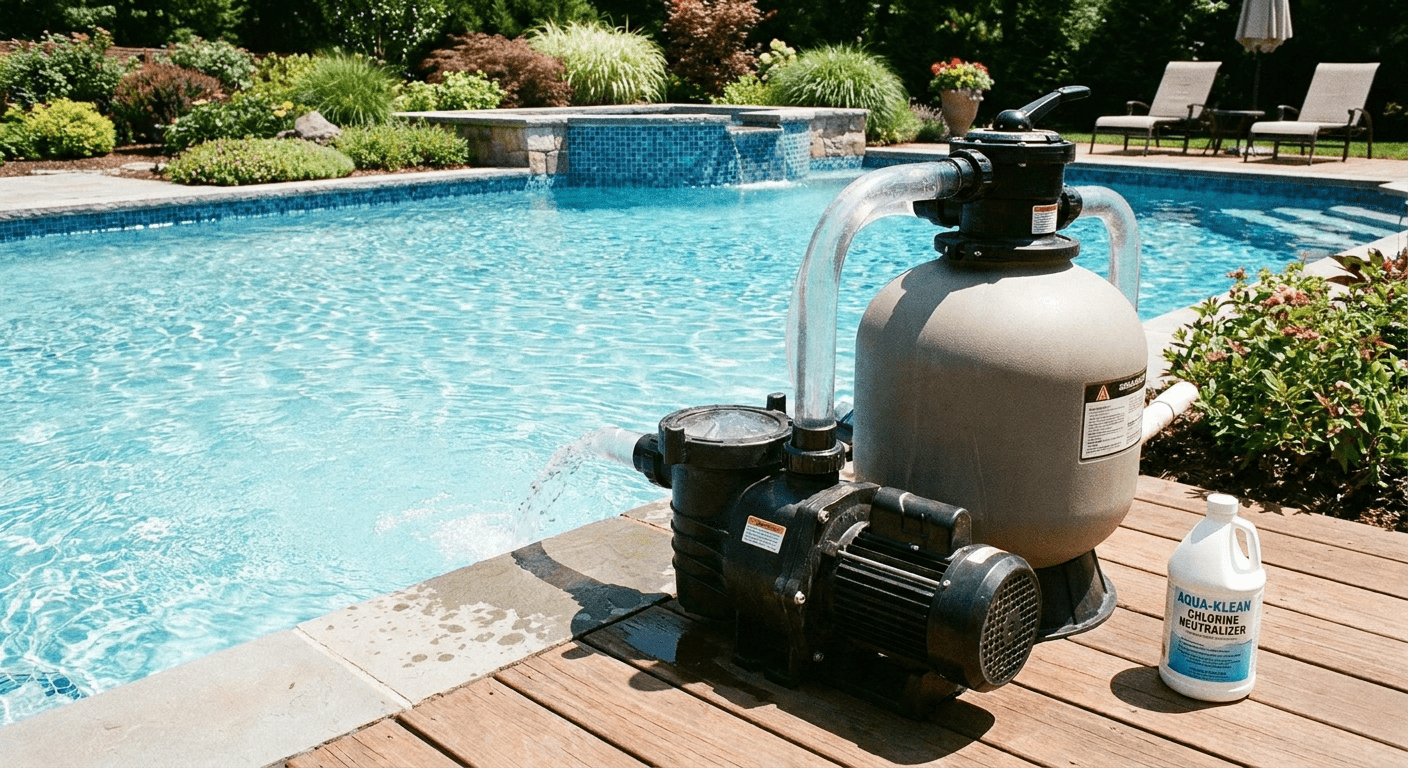
If you need the pool usable sooner, a chlorine neutralizer containing sodium thiosulfate can bring levels down quickly.
Add about half an ounce per 1,000 gallons of water, circulate for 30 minutes, then retest.
Be careful not to over-correct, as zero sanitizer leaves the pool vulnerable to algae and bacteria.
Dilute with Fresh Water
For extremely high chlorine levels, partially draining and refilling the pool is the most direct solution. Check local regulations before draining, and be mindful of your pool surface type.
Check Your Full Chemistry
Sometimes the pool still looks bad after chlorine drops. That is because the real issue is not just chlorine. Test pH, total alkalinity, cyanuric acid, and calcium hardness. If those are out of range, no amount of waiting will fix the appearance.
How to Shock a Pool the Right Way
Preventing over-shocking is better than fixing it. Follow this simple process every time.
First, test the water before you add anything.
Know your current free chlorine, combined chlorine, pH, and stabilizer level.
If the chlorine is already decent and the pH is a mess, shocking is not the right fix.
Calculate the correct dose based on your exact pool volume and the product instructions. Do not guess.
Add shock at dusk or night.
Sunlight burns through chlorine quickly, so shocking after dark gives the chemical time to work.
Run the pump for at least 8 hours after shocking to distribute the chemical evenly. Retest before you allow anyone to swim.
Do not assume the water is safe just because it looks clear.
Understanding the Risks
When algae or cloudy water does not clear right away, can you over shock your pool becomes a common concern for pool owners.
Yes, you can, and the effects range from eye and skin irritation to damaged equipment and wasted chemicals.
The good news is that with proper testing, accurate dosing, and a little patience, these problems are entirely avoidable.
Stick to the recommended amounts, test before you treat, and let the chemistry do its work.