Ultimate African Dwarf Frog Care Guide: Tanks, Food, and Mates
Have you ever wanted a tiny, swimming pet that is full of personality? Let me introduce you to a wonderful little creature. The african dwarf frog is a very popular choice for home aquariums. These fully aquatic amphibians spend their whole lives underwater. They love to swim around, explore plants, and sometimes float lazily at the top of the water. They are fun to watch and bring a lot of joy to any room.
Many people choose them because they fit well in small spaces. However, keeping them happy takes a little bit of knowledge. You need to understand their special routines to help them thrive. In this friendly guide, we will look at everything you need to know. We will cover their daily habits, their homes, and how to keep them safe. Let us dive in and learn how to become a great frog parent!
What is the Perfect African Dwarf Frog Size?
When you first see an african dwarf frog, you will notice how tiny it is. A fully grown african dwarf frog size is usually only about 1.5 to 2 inches long. This means they stay small their whole life. Their petite bodies make them look very delicate. Because they are so small, they do not need a giant ocean of space, but they still need room to move.
It is important not to confuse them with their larger cousin, the African clawed frog. Clawed frogs grow much bigger and will actually eat smaller fish. You can tell the dwarf version apart by looking at their front feet. The tiny dwarf frogs have webbed skin between all of their fingers. Knowing their true size helps you plan the perfect, safe home for them.
Understanding the African Dwarf Frog Lifespan
Before you bring a new pet home, you should know how long they live. The average african dwarf frog lifespan is about 5 to 5 years. Some lucky frogs can even live up to 5 years with amazing care. This means buying one is a real commitment. You will be taking care of your little swimming friend for a long time.
Their life depends heavily on the quality of their environment. Clean water and good food help them stay strong against sickness. I always tell new owners to think of them as long-term family members. Giving them a steady, clean home ensures you enjoy their funny antics for many years to come.
Master the Art of African Dwarf Frog Care
Good african dwarf frog care starts with watching your pets closely every day. These frogs are active, but they also have poor eyesight. They find their way around using their senses and vibrations in the water. Because they cannot see well, you must make sure their environment is very safe. Avoid any decorations with sharp edges that might scratch their soft, sensitive skin.
You also need to keep a tight lid on your aquarium. These little guys are surprisingly good jumpers. They might try to leap out if they get excited or scared. If they leave the water, they can dry out very quickly. Checking your tank daily ensures they stay safe, healthy, and happy inside their watery world.
Choosing the Best African Dwarf Frog Tank
Picking the right african dwarf frog tank is a major step for success. You want a home that gives them plenty of room to swim along the bottom. Glass tanks are wonderful because they are sturdy and easy to wipe down. Try to avoid very tall tanks. These frogs must swim up to the surface to breathe real air, so a shallow tank makes their life much easier.
Make sure you place the aquarium in a quiet spot away from bright, direct sunlight. Too much sun can cause messy green algae to grow fast. It can also make the water temperature shift too quickly. A peaceful corner in your living room or bedroom is usually the perfect spot for your new aquatic friends.
What is the Right African Dwarf Frog Tank Size?
Let us talk about space requirements. The minimum african dwarf frog tank size for a single frog is 5 gallons. However, these creatures are very social and love having friends. If you want to keep a small group of two or three frogs together, a 10-gallon tank is much better. More water helps keep the environment stable and clean.
Giving them extra space prevents them from feeling crowded or stressed. Stressed frogs can get sick easily. A 10-gallon setup provides plenty of room for swimming, hiding, and interacting. It is always a good rule of thumb to provide more space rather than less whenever you can.
The Ultimate African Dwarf Frog Tank Setup
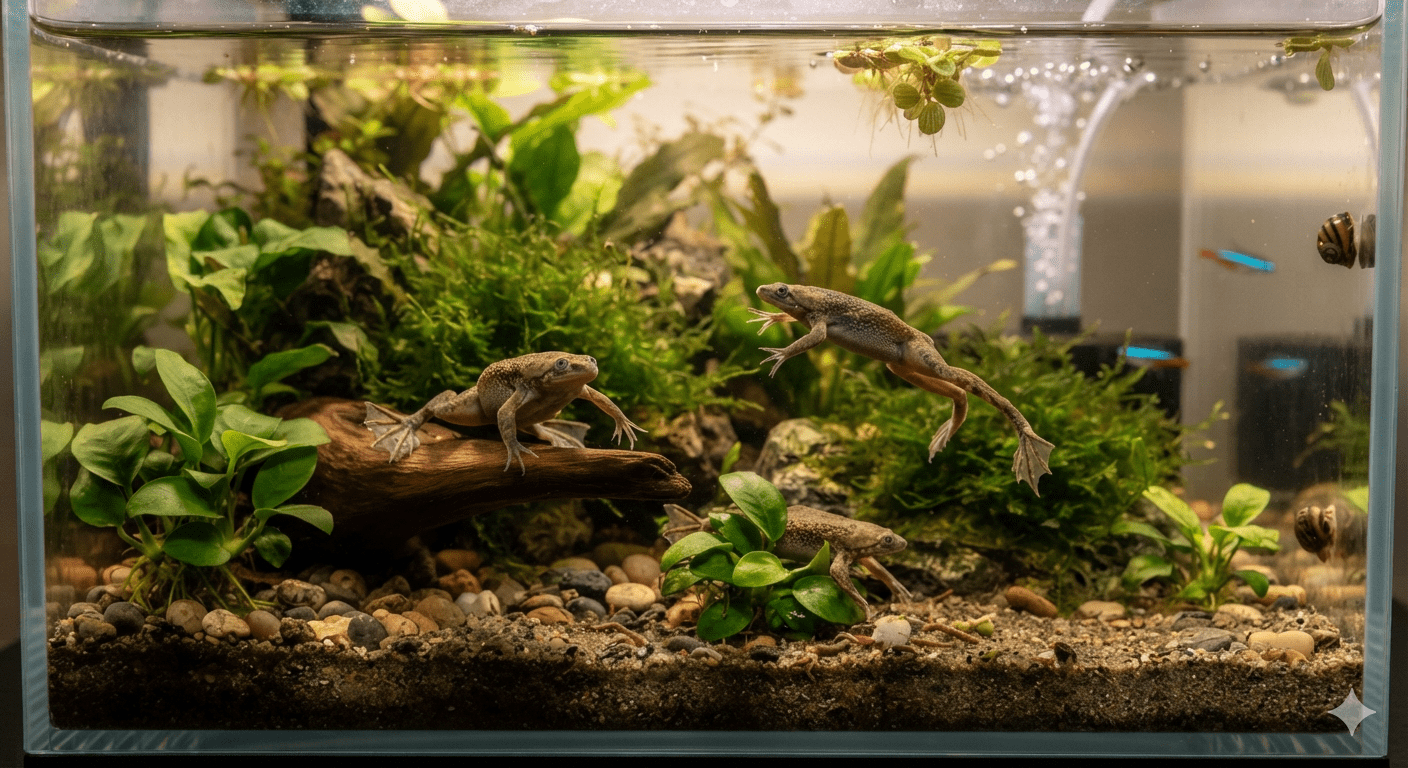
Creating a beautiful african dwarf frog tank setup is a very fun project. Start by adding a layer of smooth gravel or large river stones to the bottom. Avoid small sand that they might accidentally swallow when eating. Next, add plenty of live or soft silk plants. Frogs love to rest on leaves near the top of the water.
You should also include small caves or overturned terracotta pots. These act as perfect hiding spots when your frogs want to nap. A gentle filter is also necessary to keep the water clean. Make sure the filter flow is not too strong, as heavy currents can tire out these small swimmers. Finally, add a reliable aquarium heater to keep the water temperature between 72°F and 78°F.
The Best African Dwarf Frog Food Choices
Feeding your pets the right meals is essential for their growth. The best african dwarf frog food includes frozen or live treats. They absolutely love eating bloodworms, brine shrimp, and daphnia. You can find these at most local pet supply stores. You can also offer them special sinking pellets made specifically for aquatic frogs.
Because they have trouble seeing, you might need to drop the food right in front of them. Many owners use a long pair of tweezers or a clean turkey baster to target feed them. Feed your adult frogs once every other day. Be careful not to leave extra food rotting at the bottom, as it will ruin your clean water.
Finding a Healthy African Dwarf Frog for Sale
When you are ready to buy, look for a reputable african dwarf frog for sale. You can find them at dedicated local fish stores or larger pet shops. Before picking one, spend a few minutes watching the tank. Look for frogs that are active, alert, and swimming normally. Avoid any frogs that look overly skinny or have strange white patches on their skin.
A healthy frog will have clear eyes and smooth skin. Do not hesitate to ask the shop workers what the frogs have been eating. Buying a strong, active animal gives you the best start. It saves you from the sadness of bringing home a sick pet.
What to Do with African Dwarf Frog Eggs
If you keep males and females together, you might see african dwarf frog eggs floating on top of the water. They look like tiny, clear jelly drops with dark centers. Parents do not look after their babies. In fact, adult frogs will accidentally eat the eggs if you leave them in the same aquarium.
If you want to raise baby tadpoles, you must gently move the eggs to a separate container. Use a small cup to scoop them up carefully. The eggs will hatch into tiny swimming tadpoles in just a few days. Raising them takes extra time and special powder food, but it is an amazing process to watch.
Safe and Friendly African Dwarf Frog Tank Mates
Choosing the right neighbors keeps everyone peaceful. Good african dwarf frog tank mates include small, calm fish that swim near the top. Great options are neon tetras, guppies, and peaceful ember tetras. You can also add helpful critters like nerite snails or ghost shrimps to help clean up leftover food bits.
Avoid keeping them with large, aggressive fish like cichlids or goldfish. Big fish might bully your frogs or steal all their dinner. Since frogs eat slowly, aggressive tank mates will cause them to starve. Keeping the community peaceful ensures all your underwater pets live together without any fighting.
Frog Overview and Quick Care Facts
| Pet Feature | Ideal Requirement / Value |
| Adult Size | 1.5 to 2 inches long |
| Lifespan | 5 to 5 years (up to 5 with great care) |
| Minimum Tank Volume | 5 gallons (10 gallons preferred for groups) |
| Water Temperature | 72°F to 78°F |
| Primary Diet | Bloodworms, brine shrimp, sinking pellets |
| Compatible Neighbors | Neon tetras, guppies, peaceful snails |
Conclusion
Taking care of these small amphibians is a highly rewarding hobby. By providing the right setup, clean water, and nutritious meals, you will build a wonderful home for them. They will reward you with funny swimming dances and peaceful nighttime songs. If you are looking for a unique, small pet, these frogs are a perfect choice.
Do you have any questions about setting up your new aquarium? Or perhaps you have a funny story to share about your own pet frog? We would love to hear from you! Leave a comment down below and join our friendly community of pet lovers today.
Frequently Asked Questions
Can african dwarf frogs live out of water?
No, they cannot live out of the water. They are fully aquatic animals. They will dry out and pass away within a few hours if they escape their tank. Always keep a secure lid on top of their home.
How often should I feed my adult frog?
You should feed adult frogs once every other day. Feeding them daily can cause them to become overweight. It can also cause extra food to rot, which makes the water dirty and unsafe.
Do african dwarf frogs need a heater?
Yes, they require a reliable aquarium heater. They are tropical creatures that need warm water. Keep the temperature steady between 72°F and 78°F to keep them active and healthy.
Why is my frog floating still at the top of the tank?
This behavior is called “star-gazing” and is completely normal. They float at the top to take a quick breath of air or to rest. However, if they stay there for days without diving, check your water quality.
Can I keep a single frog by itself?
Yes, a single frog can live alone safely. However, they are naturally social animals. They usually show more natural, happy behaviors when kept in pairs or small groups of three.
How do I know if my frog is a male or female?
Male frogs are usually smaller and narrower. They also develop a small, raised white or pink pimple gland right behind their front armpits when they are ready to mate. Females are typically larger and rounder.