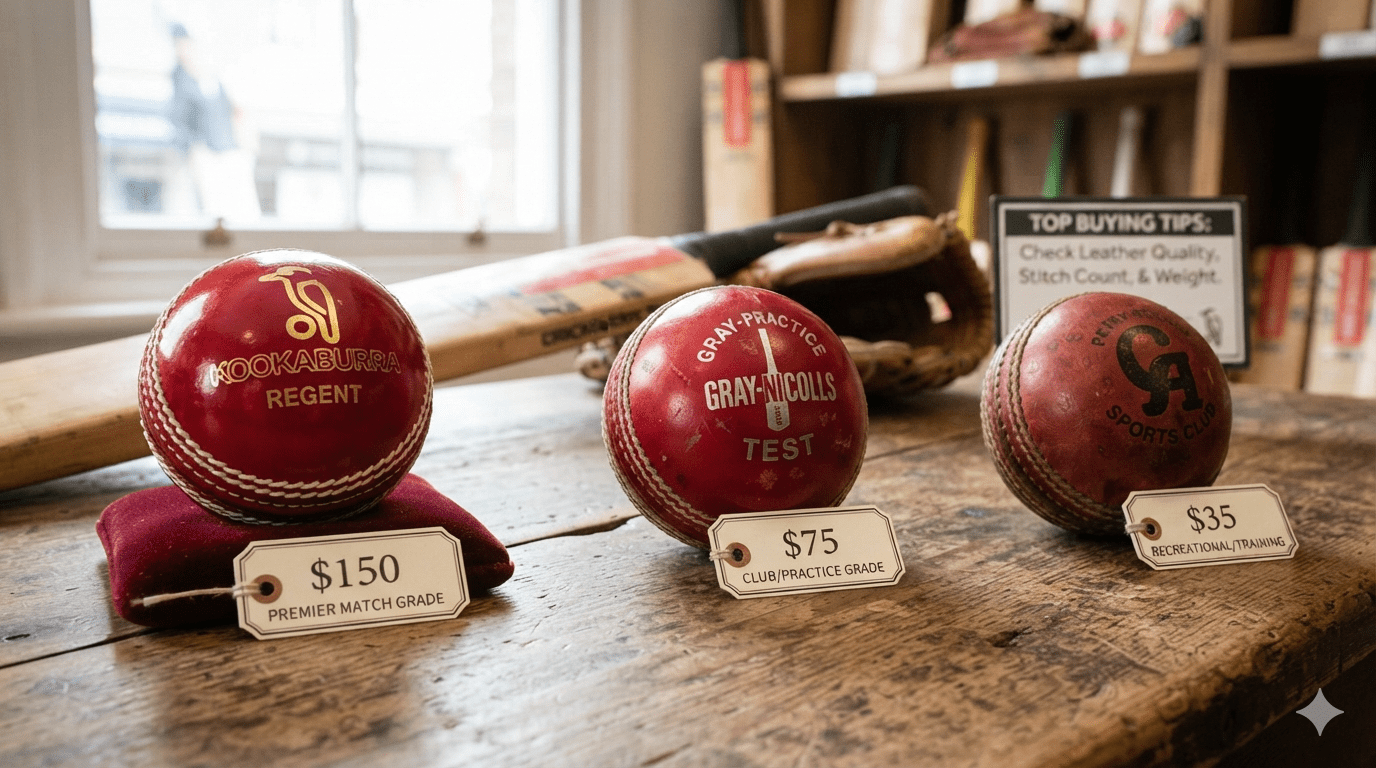
Leather Ball Price Guide: Costs, Quality, & Top Buying Tips
Buying cricket gear can feel confusing when you see so many different price tags on the market. Understanding the true leather ball price comes down to looking closely at how these balls are made. Higher-quality balls use premium alum-tanned cowhide or buffalo leather, which lasts much longer during intense matches. Cheaper options often use lower-grade composite materials that wear out quickly on rough pitches.
Another big factor in the overall leather ball price is whether the ball is hand-stitched or machine-made. Hand-stitched balls feature strong linen threads that keep the seam prominent and durable for many overs. Premium brands also use high-grade cork centers wrapped in tight layers of worsted yarn to maintain a perfect shape. When you pay more for a cricket ball, you are usually paying for better shape retention, consistent bounce, and longer durability. Understanding these key features helps you spend your money wisely without overpaying for basic practice gear.
Why Is the Red Leather Ball Price Different from White or Yellow Balls?
If you are shopping for traditional multi-day matches, you will quickly notice variations in the red leather ball price. Red balls are the classic choice for test cricket and standard weekend league matches because they offer legendary durability and natural swing. The dye used on red leather penetrates deep into the hide, making it cheaper to manufacture than white or pink options.
The main reason the red leather ball price stays so reasonable is high production volume and simpler finishing processes. White and pink balls require special protective lacquer coatings to stay visible under stadium floodlights, which increases their retail cost. Red balls remain the most cost-effective choice for daily practice sessions and standard daytime matches. Whether you buy a basic two-piece ball for practice or a top-tier four-piece ball for tournaments, red leather offers fantastic value for money.
How Does a Cricket Bat for Leather Ball Price Compare to Standard Gear?
When setting up your cricket kit, you must pair the right ball with a matching bat. The cricket bat for leather ball price is generally higher than standard tennis ball bats because of the required material strength. Leather balls are hard and fast, so your bat needs to be crafted from genuine English willow or high-grade Kashmir willow to absorb intense impacts.
Investing in a proper cricket bat for leather ball price ensures your bat will not crack or split during a game. Kashmir willow bats are great for beginners on a budget, offering strong resistance to hard leather impacts. English willow bats cost more, but they offer superior balance, massive sweet spots, and powerful shot delivery. Making sure your bat matches the hardness of your cricket ball protects your investment and improves your performance on the field.
Looking at the Kookaburra Leather Ball Price in India
Cricket fans and players around the world respect big brand names, especially when playing high-level matches. If you look up the kookaburra leather ball price in india, you will find that top-tier match balls sit at the higher end of the spectrum. Kookaburra balls are world-famous for their precise machine stitching and exceptional performance on hard pitches.
The reason the kookaburra leather ball price in india carries a premium tag is strict quality control and import costs. Professional leagues choose these balls because they deliver reliable bounce, fair swing, and incredible seam integrity over long innings. For daily practice, Kookaburra offers entry-level training balls that give you brand quality at a fraction of the cost. Checking these prices helps players choose between professional match-grade options and affordable practice gear.
What Is the Average Leather Ball Price in Nigeria?
Cricket is growing fast in West Africa, leading many young athletes to search for local equipment costs. Understanding the leather ball price in nigeria helps local clubs and aspiring players budget for their upcoming cricket seasons. Equipment costs in Nigeria often depend on import fees, shipping rates, and local vendor availability.
The average leather ball price in nigeria varies based on whether you buy basic local training balls or imported international brands. Grassroots academies usually buy bulk training balls to keep costs down while developing young talent. As local sports shops stock more international brands, prices are becoming far more competitive. Knowing local market rates allows Nigerian cricket teams to source durable equipment without stretching their financial resources.
How Are Leather Cricket Balls Manufactured?
The journey of a cricket ball from raw hide to finished product involves amazing craftsmanship. Skilled artisans carefully cut genuine leather into four or two distinct quarters depending on the design. These leather pieces are dyed, stretched, and molded over a solid cork and wool core to create a perfect sphere.
A fair leather ball price reflects the intense manual effort required to stitch the central seam correctly. Hand-stitching requires precise tension so the ball does not lose its round shape after repeated hits from heavy bats. High-end balls undergo rigorous quality checks to measure weight, circumference, and balance. Learning how these balls are built gives you a deeper appreciation for the work behind every match-ready leather ball.
Two-Piece vs. Four-Piece Leather Balls: Cost and Performance
Choosing between a two-piece and a four-piece leather ball comes down to your level of play and overall budget. Two-piece balls are made by joining two hemispherical leather shells around the core, making them simpler and less expensive to construct. These budget-friendly options offer a lower leather ball price and work perfectly for youth games, net practice, and casual club sessions.
Four-piece balls are crafted from four separate pieces of leather, creating two distinct inner seams alongside the main outer seam. This advanced construction helps the ball retain its shape much longer during grueling 50-over or multi-day matches. While four-piece options increase the overall leather ball price, they deliver superior swing, seam movement, and long-term durability. Investing in four-piece balls is ideal for official competitive tournaments where consistent bounce is vital.
Essential Tips to Maintain Your Leather Cricket Ball
Taking good care of your cricket equipment extends its lifespan and saves you money in the long run. Even a mid-range leather ball price becomes a great investment if you know how to clean and store your equipment properly. Water is the biggest enemy of leather gear because moisture damages the inner core and rots the stitching.
Always wipe your ball with a dry cloth after playing on damp outfields or wet grass pitches. Store your gear in a cool, dry place away from direct sunlight to prevent the leather hide from drying out and cracking. Applying a tiny amount of natural leather wax occasionally keeps the outer shell supple and water-resistant. Proper maintenance keeps your leather ball performing like new for many matches to come.
How to Choose the Right Leather Ball for Your Budget
Finding a reasonable leather ball price requires balancing your immediate training needs with your available playing budget. Beginners and young players do not need to buy top-tier international match balls for basic practice. High-quality training balls offer excellent durability at a much lower cost, making them perfect for honing your skills.
When shopping online or at a local sports store, always check the ball’s weight and leather quality before buying. Standard adult balls should weigh around 156 to 163 grams, while junior balls are lighter for safety and ease of use. Comparing different brands helps you secure an affordable leather ball price without sacrificing essential safety features. Smart shopping allows you to build a full equipment kit while staying well within your budget.
Comparing Leather Balls with Synthetic and Rubber Alternatives
Many beginners wonder if paying a higher leather ball price is worth it compared to buying rubber or synthetic balls. Synthetic and heavy rubber balls are great for casual street cricket because they require zero maintenance and handle wet conditions easily. However, they bounce differently and do not offer the realistic seam feel needed for real match practice.
A genuine leather ball price reflects real performance benefits that help bowlers and batters develop proper techniques. Leather balls allow bowlers to practice genuine wrist spin, seam positioning, and conventional swing in realistic conditions. Batters also learn to control their shots properly against hard, fast deliveries. Transitioning to real leather balls is an essential step for any player looking to succeed in competitive cricket leagues.
Summary of Cricket Equipment Pricing
To give you a quick overview of equipment costs across different categories, check out this handy comparison table before making your next purchase decision.
| Equipment Type | Typical Target Audience | Key Material / Feature | Average Price Range |
| Training Leather Ball | Beginners & Net Practice | Two-piece alum-tanned leather | Affordable / Budget-Friendly |
| Match-Grade Red Ball | Club & League Matches | Four-piece hand-stitched leather | Mid-Range Value |
| Pro Kookaburra Ball | Professional Tournaments | Premium four-piece hide & cork core | High-End Premium |
| Kashmir Willow Bat | Intermediate Players | Impact-resistant Kashmir willow | Mid-Range Value |
| English Willow Bat | Advanced & Pro Players | Light, powerful English willow | High-End Premium |
(FAQs)
What is the average leather ball price for beginners?
Entry-level practice balls usually offer a low leather ball price that fits tight budgets. These two-piece balls are perfect for net practice, youth training sessions, and friendly weekend games.
Is the red leather ball price cheaper than white balls?
Yes, the red leather ball price is generally lower because red leather requires fewer specialized coatings. White and pink balls need extra protective lacquer to remain visible during night games under bright stadium lights.
Why is the cricket bat for leather ball price higher than tennis bats?
A cricket bat for leather ball price reflects the high quality of hard willow needed to withstand hard impacts. Tennis ball bats are much thinner and lighter because they do not have to absorb hits from heavy leather balls.
Why does the kookaburra leather ball price in india cost more than local brands?
The kookaburra leather ball price in india includes import taxes, international shipping, and high manufacturing standards. Their precise machine stitching makes them the top choice for high-level professional cricket tournaments.
How can I find an affordable leather ball price in nigeria?
To get a great leather ball price in nigeria, look for sports distributors that sell training balls in bulk. Buying multi-packs for clubs or academies significantly lowers the cost per ball.
How long does a standard four-piece leather ball last?
A high-quality four-piece leather ball easily lasts 40 to 80 overs in standard match conditions. Keeping the ball dry and storing it properly in a cool place helps it maintain its shape and shine even longer.
Conclusion
Finding the right leather ball price comes down to knowing your exact playing level, budget, and match needs. Whether you need an affordable two-piece ball for net practice or a premium four-piece match ball for tournament play, there are great options for every price point. Remember to care for your gear by keeping it dry and clean so it lasts through as many overs as possible. Ready to upgrade your cricket kit today? Explore your local sports shop or trusted online retailers to score the best deals on high-performance leather balls!