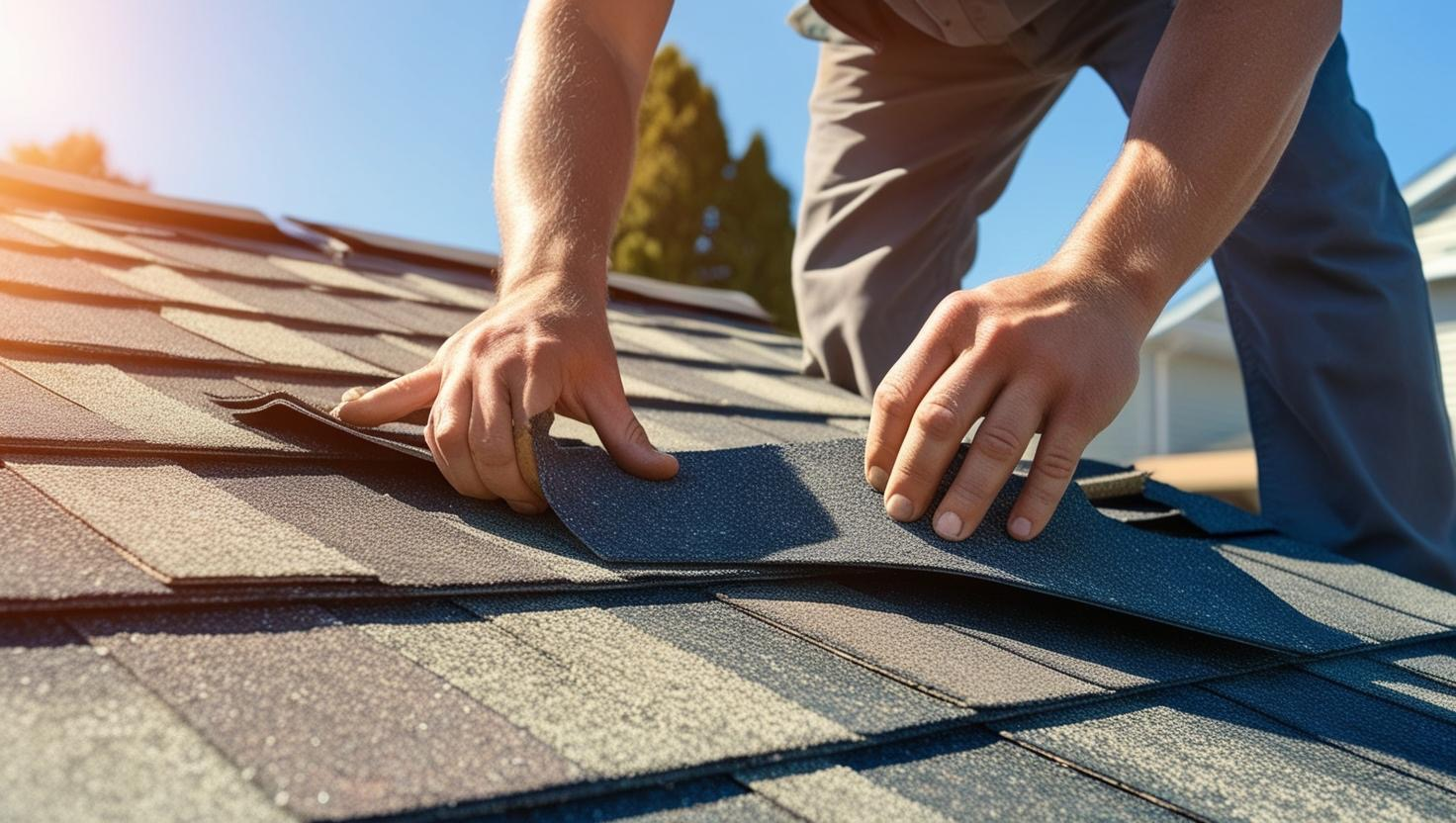
Repair or Replace? How to Make the Right Call on Your Roof This Spring
The Question Nobody Wants to Answer
Every spring in Calgary, thousands of homeowners look at their roof and face the same uncomfortable decision. Winter left some damage — maybe a few missing shingles, some curling at the edges, a stain on the bedroom ceiling. The roof is not collapsing, but it is clearly not what it was. The question becomes: do you patch what is broken and squeeze out a few more years, or do you accept that the roof has reached the end of its functional life and commit to a full replacement?
It is not a trivial decision. A repair might cost $300 to $1,500. A full replacement runs $8,000 to $20,000 or more depending on the size, pitch, and material. Getting it wrong in either direction costs you money. Repairing a roof that genuinely needs replacement means paying for repairs that do not solve the underlying problem, then paying for the replacement anyway when the next issue appears six months later. Replacing a roof that only needed a targeted repair means spending five figures on a project that was not yet necessary.
Here is how to think through it clearly.
Start With the Age of the Roof
The single most important variable in the repair-versus-replace decision is how old the roof is. Asphalt architectural shingles installed in Calgary have a realistic lifespan of 20 to 25 years. Some premium products push toward 30 in ideal conditions, but Calgary conditions are not ideal. Our freeze-thaw cycles, hail exposure, and UV intensity at 1,045 metres of elevation shorten the practical life of most shingle products compared to the manufacturer’s rated lifespan.
If your roof is under 10 years old and you are dealing with localized damage — a few missing shingles, a failed vent boot, a small flashing issue — repair almost always makes sense. The bulk of the roof still has significant remaining life. If your roof is between 15 and 20 years old and showing multiple issues across different areas, you are in the grey zone where either option could be justified, and the decision comes down to the scope and distribution of the damage. If your roof is 20-plus years old and showing any meaningful damage, replacement is usually the more rational financial decision because repairs are buying time on a system that is approaching the end of its material life regardless.
Localized Damage vs. Systemic Failure — The Critical Distinction
A roof with one problem area and an otherwise healthy surface is a repair candidate. A roof with problems scattered across multiple areas is telling you something about the overall condition of the material, not just the spots where symptoms are showing.
Think of it like a car with 300,000 kilometres. If the alternator dies but the engine, transmission, and body are solid, you replace the alternator. If the alternator dies and the transmission is slipping and the brake lines are rusting and the suspension is shot, the alternator is not the real problem — the car is worn out.
Localized damage on a roof typically has an identifiable cause. A branch fell on one section. Ice dammed in a specific valley because of a ventilation dead spot. A vent boot cracked because it was a cheaper product that aged faster than the shingles around it. These are isolated failures with clear solutions.
Systemic issues present differently. Granule loss is widespread, not just in one area. Shingle edges are curling across the entire south-facing slope. Adhesive bonds are failing on multiple tabs in different locations. The underlayment is visible where shingles have thinned. These patterns indicate the material itself has degraded and the remaining roof is living on borrowed time.
Granule Loss — How Much Is Too Much
Every asphalt shingle roof sheds some granules. New shingles lose excess granules during their first year or two — this is normal manufacturing residue. Established shingles shed very gradually as the surface weathers over time.
What is not normal is finding thick deposits of granules in your gutters, pooled at downspout exits, or washed against the foundation every spring. That volume of loss indicates the protective mineral coating is eroding significantly. The granules are what protect the asphalt mat from UV degradation. Once they are gone, the asphalt dries, cracks, and curls at an accelerated rate. A roof with advanced granule loss might still keep water out today but is aging exponentially faster than one with an intact granule surface.
If you run your hand across a shingle and large amounts of granules come off easily, or if you can see the black asphalt mat showing through in patches, the shingles are past the point where a repair addresses the real problem. Replacing the damaged shingles only gives you new material surrounded by old material that will fail next.
The Patchwork Problem — Why Partial Repairs Have Limits
Replacing a section of shingles after storm damage or localized failure is a perfectly valid repair strategy on a younger roof. On an aging roof, it creates a patchwork of materials at different life stages.
Here is the practical issue. New shingles installed as a patch will not perfectly match the colour or texture of the existing weathered shingles. More importantly, the new shingles will expand and contract at a different rate than the aged material around them, which can create stress points at the transition line. The sealant strips on new shingles will bond differently than the compromised strips on the surrounding old shingles. And when the next hailstorm comes through, the aged shingles around the patch are just as vulnerable as they were before the repair.
One patch on a 10-year-old roof is fine. Two or three patches on a 20-year-old roof means you are spending real money every year to maintain a surface that is failing systemically. At some point, the cumulative cost of repairs exceeds what a replacement would have cost, and you still end up needing the replacement.
Decking Condition Changes the Calculation
The decking — the plywood or OSB sheathing that forms the structural surface beneath the shingles — is the variable that most dramatically shifts the repair-versus-replace decision. If the decking is solid, dry, and structurally sound, you have more flexibility. If the decking is compromised, the equation changes.
Soft spots on the roof surface, visible water staining on the underside of the deck in the attic, or areas where the sheathing feels spongy under pressure all indicate moisture damage. Damaged decking needs to be cut out and replaced, and that can only be done properly by removing the shingles above it. If the damaged decking is in one small area, a targeted repair makes sense. If moisture damage is widespread — especially if it is related to chronic ventilation or insulation problems that have been ongoing for years — a full replacement allows you to address the decking, fix the underlying cause, and start fresh with a complete system.
Insurance, Hail History, and the Timing Factor
Calgary’s hail exposure adds a layer to the decision that homeowners in other cities do not face. If your roof sustained hail damage that was documented and claimed through insurance, you likely have a record of the event. If a second hailstorm damages the same roof before it has been replaced, subsequent claims become more complicated. Adjusters will distinguish between new damage and pre-existing deterioration, and a roof that was already flagged as aging may not receive full replacement coverage.
Conversely, if you know a claim is coming — for example, if you had documented storm damage last summer and have not yet completed the repair — spring is the time to get it done before another season of exposure worsens the condition.
The Financial Comparison Most People Skip
Homeowners tend to compare the cost of a repair today against the cost of a replacement today. That is the wrong comparison. The right comparison is the total cost of repairs over the remaining life of the roof versus the cost of a replacement now.
If your roof is 18 years old and you spend $1,200 on a repair this spring, then $800 next year on another issue, then $2,000 the following year when flashing fails across a wider area, you have spent $4,000 in three years and you still need a new roof. Had you committed to a residential roof replacement in year one, you would be three years into a 25-year roof with no repair costs.
When Repair Is the Clear Winner
Your roof is under 15 years old and the damage is isolated to one area. A specific event caused the damage, such as a fallen branch or a localized ice dam. The surrounding shingles are in good condition with intact granules and solid adhesive bonds. The decking beneath the damaged area is dry and sound. You are not seeing symptoms anywhere else on the roof.
When Replacement Is the Clear Winner
Your roof is 20-plus years old and showing damage in multiple locations. Granule loss is widespread and you can see the asphalt mat through the shingle surface. You are finding shingle fragments in the yard after moderate winds, not just severe storms. Multiple vent boots, flashing joints, or sealant points have failed. The attic shows evidence of chronic moisture, including staining, damp insulation, or mould. You have already done one or more rounds of repairs in recent years and new issues keep appearing.
Making the Call
The honest answer for most homeowners is that the decision is not purely about the roof. It is about how long you plan to stay in the home, what your budget can absorb, and how much risk you are comfortable carrying through another hail season. A professional inspection is the best investment you can make in this decision. A qualified roofer who is not pressuring you toward either option can assess the full scope — material condition, decking integrity, ventilation function, remaining life estimate — and give you the information you need to decide with confidence.
Spring is the right time to have that conversation. You have a full construction season ahead of you, contractor availability is better than it will be mid-summer, and you can make the decision on your terms rather than scrambling after the next storm forces your hand.
About Superior Roofing Ltd.
Trying to decide whether your roof needs a repair or a full replacement? Superior Roofing Ltd. gives Calgary homeowners honest, straightforward assessments with no pressure to over-buy. Whether it is a targeted repair to get more years out of your current roof or a complete replacement done right, their team walks you through every option. Visit superiorroofingltd.ca for a free estimate.