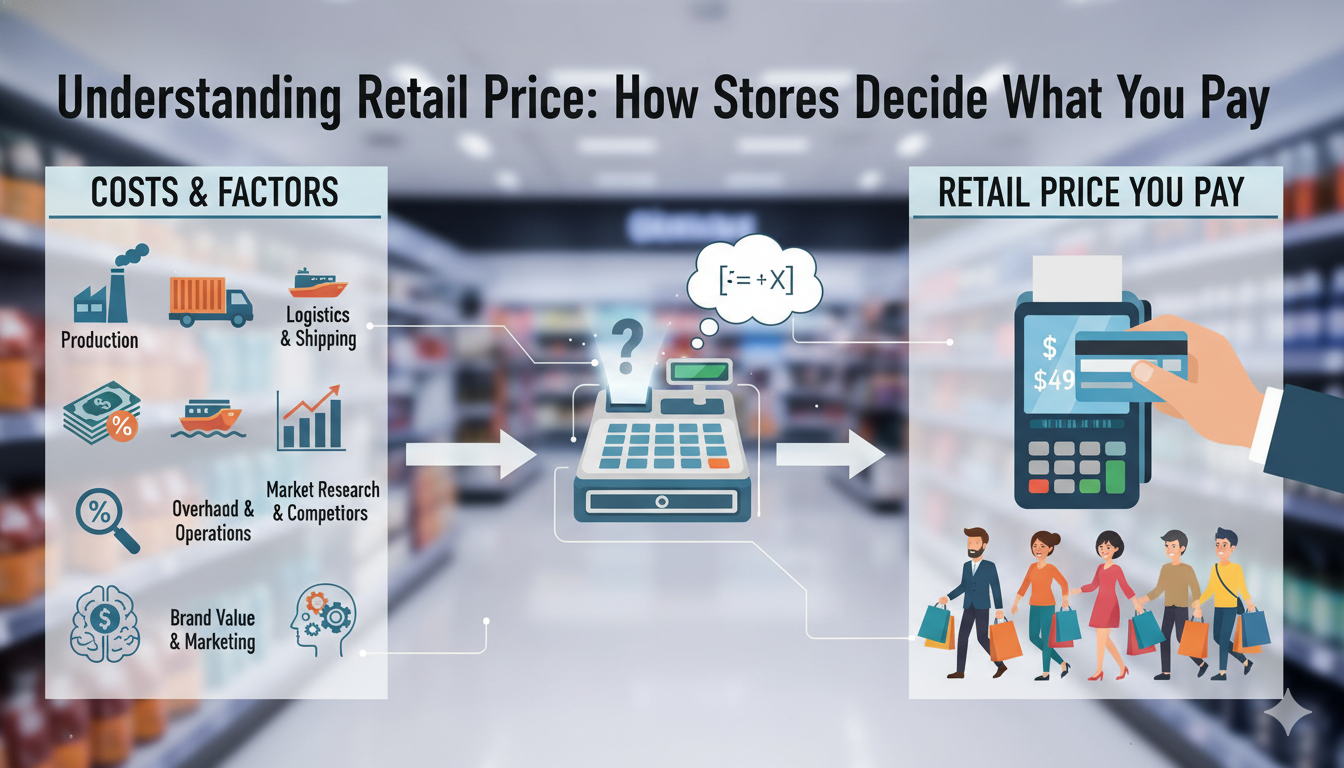
Understanding Retail Price: How Stores Decide What You Pay
Have you ever walked into a store, looked at a tag, and wondered why a shirt costs $20? That number you see is called the retail price. It is the final cost that a person pays when they buy something from a shop. Whether you are buying a loaf of bread or a brand-new car, the retail price is the amount the seller wants for that item. Most of the time, this price is higher than what the store paid to get the item. This difference helps the store pay for its building, its workers, and its lights. Understanding how this works can help you become a much smarter shopper in the long run.
Setting a retail price is like a big puzzle for store owners. They have to make sure the price is low enough that people want to buy it, but high enough so the store does not lose money. If the price is too high, the item stays on the shelf forever. If it is too low, the store might go out of business. Every time you see a retail price on a website or a sticker, a lot of thought went into that specific number. In this guide, we will break down the secrets of pricing so you can understand the world of shopping better.
What Exactly Is the Retail Price?
The retail price is the total amount of money a customer pays for a product at a store. Think of it as the finish line for a product’s journey. Before a toy reaches your hands, it starts at a factory. The factory sells it to a big warehouse, and then the warehouse sells it to the store. Each step adds a little bit of cost. By the time it gets to the shelf, the retail price includes all those costs plus a little extra for the store’s profit. It is the price for the “end user,” which is a fancy way of saying “you.”
The Difference Between Wholesale and Retail
To understand the retail price, you have to know about wholesale. Wholesale is the price a store pays when they buy 1,000 shirts at once. Because they buy so many, the factory gives them a discount. For example, a store might buy a shirt for $5. That $5 is the wholesale price. Then, the store puts it on the rack with a retail price of $15. The $10 they added is called a “markup.” This markup is very important because it pays for the store’s rent and the people who work there.
Why Does the Retail Price Change?
You might notice that the retail price of a video game or a pair of shoes changes over time. This happens for many reasons. Sometimes, a store has too many items and needs to clear space, so they lower the price. Other times, something becomes very popular, and the price might go up. Supply and demand play a huge role here. If everyone wants the same toy for the holidays, the retail price might stay high. If nobody wants it anymore, you will see it in the clearance section for a much lower cost.
Understanding MSRP and Suggested Prices
Have you ever seen a label that says “MSRP”? This stands for Manufacturer’s Suggested Retail Price. It is basically the factory telling the store, “We think you should sell this for $50.” However, the store does not always have to listen. They can set the retail price lower to attract more customers or higher if the item is hard to find. MSRP is like a helpful hint, but the store usually makes the final choice. It is always a good idea to check if the store is sticking to the MSRP or giving you a better deal.
How Sales and Discounts Affect Pricing
A “sale” is just a temporary change to the retail price. Stores love to use sales to make you feel like you are winning. When you see a sign that says “50% off,” the store is dropping the retail price to get you inside. Even with a big discount, most stores still make a little bit of money. They use these lower prices to make room for new things. Smart shoppers often wait for the retail price to drop during holiday sales like Black Friday or end-of-season events to save their hard-earned cash.
The Role of Competition in Pricing
If there are two pizza shops on the same street, they watch each other closely. If Shop A sets a retail price of $10 for a pizza, Shop B might try to sell theirs for $9. This is called competition. It is great for you because it keeps prices from getting too high. Stores are always fighting to have the best retail price so that you choose them over someone else. This is why it pays to look at different websites or stores before you buy something expensive.
Psychological Pricing Tricks
Have you ever wondered why so many things cost $9.99 instead of $10.00? This is a trick called “charm pricing.” Even though it is only one cent cheaper, our brains see the “9” and think it is a much better deal. It makes the retail price feel lower than it actually is. Stores also use bright red signs because red makes us feel excited and ready to spend. Being aware of these little tricks can help you stay calm and think clearly when you are looking at a retail price tag.
Online vs. In-Store Retail Prices
Sometimes, the retail price on a website is different from the price in a physical building. Online stores often have lower costs because they don’t have to pay for a big, fancy shop with many employees. They might pass those savings on to you with a lower retail price. However, you have to watch out for shipping costs! A low price online can quickly become expensive once you add the cost of mailing the item to your house. Always compare the total cost, not just the number on the tag.
Why Some Items Never Go on Sale
Some luxury brands are very strict about their retail price. You might notice that certain high-end phones or designer bags never seem to have a discount. These companies want to keep their brand feeling “special.” If the retail price is always high, people think the item is very high quality. They don’t want people waiting for a sale because it might make the brand look “cheap.” For these items, the price you see is usually the price you will have to pay.
How to Find the Best Retail Price
Finding a good deal is like a fun treasure hunt. The best way to find a low retail price is to use price comparison tools online. There are apps that can tell you if a price has gone up or down over the last month. You can also ask for a “price match.” Some big stores will lower their retail price right at the register if you can show them that another store is selling the same thing for less. Never be afraid to look around and do a little bit of research.
The Future of How We Pay
In the future, the retail price might change instantly based on who is looking at it. This is called “dynamic pricing.” Some stores already do this with things like plane tickets or hotel rooms. As technology gets better, more shops might change the retail price based on the time of day or how many people are in the store. While this sounds a bit strange, it is all part of how stores try to stay successful in a world that moves very fast.
Conclusion
Now you know that the retail price is much more than just a number. it is a mix of costs, math, and even a little bit of psychology. By understanding how stores set their prices, you can make better choices with your money. Always remember to look for the wholesale value, keep an eye out for MSRP hints, and don’t be fooled by the “.99” trick. The more you know about the retail price, the more power you have as a shopper. Happy hunting for those great deals!
(FAQs)
1. Is the retail price the same as the cost to make the item?
No, the retail price is almost always higher than the cost to make the item. The store adds extra money to cover their bills and make a profit.
2. Can I negotiate a retail price?
In big department stores, you usually cannot negotiate. However, in smaller shops or for big items like cars and appliances, you can sometimes ask for a lower retail price.
3. Does the retail price include tax?
In the United States, the retail price on the tag usually does not include sales tax. You will see the tax added at the very end when you pay at the register.
4. Why is the retail price different in different states?
Stores might change the retail price based on how much it costs to run a business in that area. Rent in a big city is much higher than in a small town.
5. What does “Minimum Advertised Price” mean?
This is similar to MSRP. It is a rule where a factory tells a store they cannot show a retail price below a certain amount in their ads or flyers.
6. How do I know if a retail price is fair?
The best way to know is to compare. Check at least three different stores. If most of them have the same price, it is likely the standard retail price for that item.