The Ultimate Tongued Skink Care Guide: Pets, Diet & Enclosures
Have you ever seen a lizard with a bright blue tongue? It looks like it just ate a blue raspberry popsicle! This amazing creature is known as a tongued skink. These unique lizards are famous all over the world. They make wonderful pets for people who love reptiles. They are gentle, slow, and full of personality.
Many people choose a blue tongued skink pet when they want a calm reptile friend. These animals come from places like Australia and Indonesia. They have flat bodies and short little legs. They look like friendly little sausages crawling on the ground. Kids and adults love watching them explore their surroundings.
If you want a cool pet, a tongued skink might be the perfect choice. They are easy to tame and fun to feed. In this guide, we will look at how to care for them. We will talk about their homes, their food, and how to keep them happy. Let us dive into the world of these colorful reptiles!
What is a Tongued Skink?
A tongued skink is a medium-sized lizard that belongs to the scincidae family. They are known for their thick bodies and smooth scales. Their most famous feature is their colorful tongue. They stick their tongues out to taste the air and learn about their environment. This helps them find food and stay safe from danger.
In the wild, a tongued skink likes to hide under logs, rocks, and leaves. They are not fast runners, so they use camouflage to hide from predators. Their brown and gray patterns help them blend into the dirt. If a predator gets too close, the skink opens its mouth wide and shows its bright tongue to scare the enemy away.
Meet the Famous Blue-Tongued Skink
The blue-tongued skink is the most popular member of this lizard family. People love them because they are very gentle creatures. They adapt well to living with humans. They quickly learn that their owners bring them delicious food. This makes them much calmer than many other types of lizards.
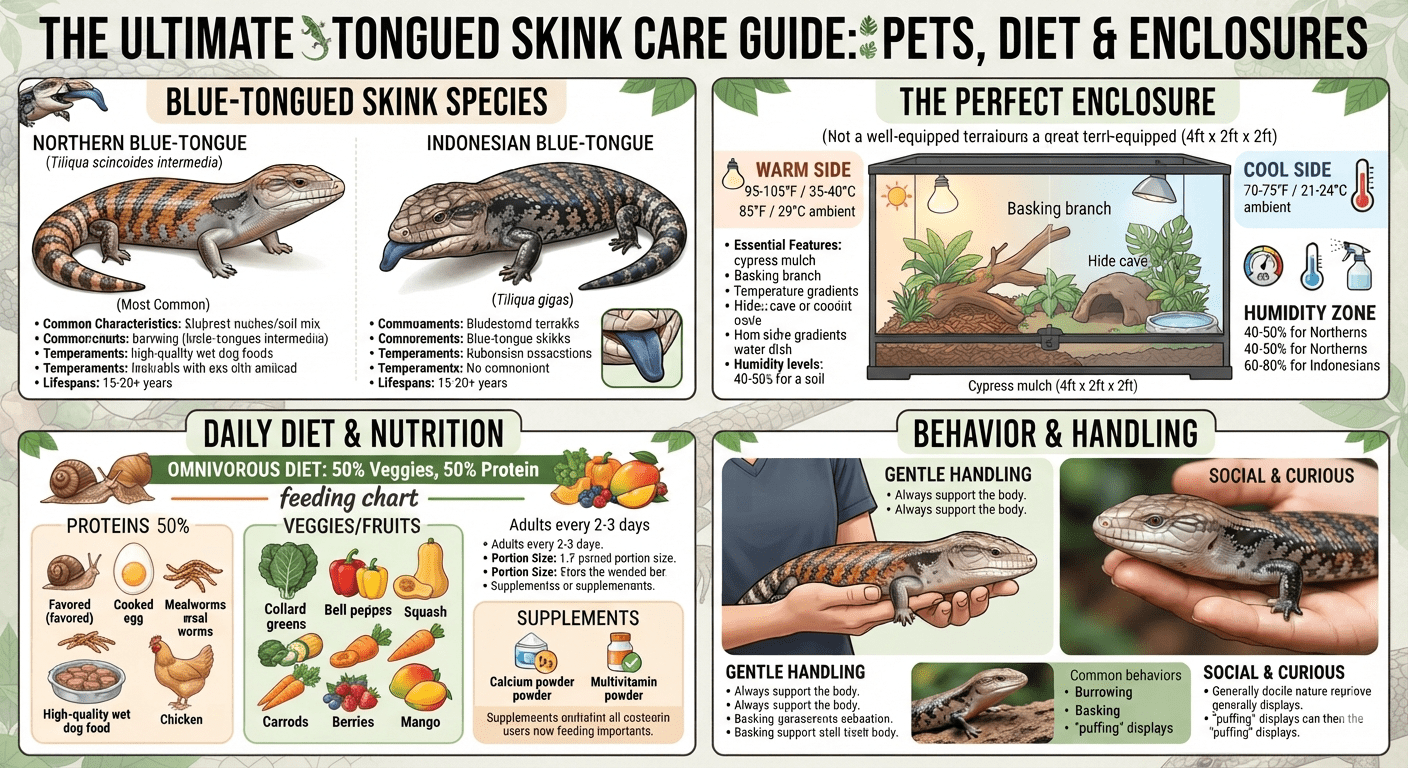
When you hold a blue tongued skink, they usually sit quietly on your arm. They enjoy the warmth of your skin. Because they are not skittish, they are great for beginners. You just need to support their whole body when you pick them up. This makes them feel safe and secure in your hands.
Discover the Northern Blue-Tongued Skink
The northern blue-tongued skink is a special type of lizard from Australia. It is the largest of all the blue-tongued skinks. They can grow up to 24 inches long from their nose to their tail. They have beautiful orange and yellow bands across their backs. These bright colors make them look like living art pieces.
Pet owners highly prize the northern blue tongued skink because they are born in captivity. This means they are used to humans from the day they hatch. They rarely bite and are very hardy. They love to bask under a warm heat lamp and watch what is happening inside your room.
The Rare and Unique Pink-Tongued Skink
Not every tongued skink has a blue tongue! The pink-tongued skink is a cousin with a completely different look. As babies, they have black tongues, but the color changes to bright pink as they grow up. They have slender bodies and longer tails than their blue-tongued relatives.
The pink tongued skink loves to climb trees. They have sharp little claws that help them grip onto branches and bark. In the wild, they live in the rainforests of Australia. They are very unique because they eat mostly snails. If you want a lizard that is a bit different, this climbing skink is a great choice.
The Complete Tongued Skink Biography Table
To understand these amazing lizards better, let us look at their key traits. This table compares the different types you can find.
| Feature | Blue-Tongued Skink | Northern Blue-Tongued Skink | Pink-Tongued Skink |
| Adult Size | 18 to 24 inches | 20 to 24 inches | 14 to 18 inches |
| Tongue Color | Bright Dark Blue | Bright Blue | Pink |
| Favorite Habit | Living on the ground | Living on the ground | Climbing trees and plants |
| Wild Home | Australia and Indonesia | Northern Australia | Eastern Australia |
| Primary Diet | Bugs, plants, and fruit | Bugs, greens, and fruit | Land snails and slugs |
Setting Up the Perfect Blue Tongued Skink Enclosure
Your pet needs a great home to stay healthy. A proper blue tongued skink enclosure should be large and secure. A single adult lizard needs a tank that holds at least 40 gallons. A front-opening wooden or glass terrarium is best. This allows you to reach in easily without scaring your pet.
The bottom of the tank needs a safe material called substrate. You can use cypress mulch or coco husk. This material helps hold a little bit of humidity. It also lets your tongued skink dig and burrow, which is their favorite hobby. Avoid using sand or pine shavings because these can make your lizard sick.
Heating and Lighting Needs for Your Lizard
Lizards are cold-blooded animals. They cannot make their own body heat. They need a warm side and a cool side in their home. Put a heat bulb on one side of the tank. This creates a basking spot that reaches around 95 degrees Fahrenheit. The cool side should stay around 75 to 80 degrees.
Your tongued skink also needs a special light called a UVB bulb. This light mimics the natural sun. It helps your lizard absorb calcium into its bones. Without UVB light, their bones can become soft and weak. Keep the lights on for 12 hours during the day and turn them off at night.
The Best Blue Tongued Skink Diet
Feeding your pet is fun because they eat many different foods. A healthy blue tongued skink diet is a mix of plants and proteins. Young skinks need more meat to grow big and strong. Adult skinks should eat mostly leafy green vegetables and a smaller amount of protein.
Great Greens to Feed Your Skink: Dandelion greens, turnip greens, mustard greens, and collard greens. Avoid iceberg lettuce because it has no vitamins.
For protein, you can feed them live dubia roaches, crickets, and earthworms. You can even offer them high-quality grain-free wet dog food as a special treat! For fruit, they love small pieces of berries, bananas, and papaya. Always sprinkle a little calcium powder on their food twice a week.
Understanding the Blue Tongued Skink Lifespan
Before you bring a lizard home, you must realize they live a long time. The average blue tongued skink lifespan is between 15 and 20 years. Some well-cared-for pets have even lived for 25 years! This means a tongued skink is a long-term commitment, just like a dog or a cat.
To help your lizard live a long life, keep their home clean. Remove waste every single day. Change their fresh water bowl daily because they like to walk through it. Regular vet checkups with an exotic animal doctor will keep your tongued skink in perfect shape for many years.
How to Handle and Bond with Your Skink
Bonding with a tongued skink takes a little bit of patience. When you first bring them home, let them rest for a few days. Do not try to hold them right away. Let them get used to the new sounds and smells of your house.
Once they are settled, start by placing your hand inside the enclosure. Let the lizard crawl over your fingers. You can offer a tasty blueberry from your hand. Soon, they will connect your presence with good things! Always hold them close to the floor so they do not accidentally fall and get hurt.
Conclusion
In conclusion, a tongued skink is one of the most rewarding reptile pets in the world. Whether you choose a classic blue-tongued skink or a climbing pink-tongued skink, you will get a fascinating companion. They are full of curiosity and have a wonderfully calm attitude.
Providing the right food, a large enclosure, and proper heating ensures your lizard thrives. They will reward you with years of quiet companionship and fun feeding moments. Are you ready to welcome one of these blue-tongued beauties into your family?
Frequently Asked Questions
1. Can two blue-tongued skinks live together in the same tank?
No, it is best to keep them alone. They are solitary animals and like having their own space. If you put two of them together, they will fight over food and heat. This can cause serious injuries to your pets.
2. How often should I feed an adult tongued skink?
Adult lizards only need to eat two or three times a week. If you feed them every day, they can become overweight. Young growing skinks need to be fed every other day to help them grow.
3. Why is my skink’s skin turning dull and peeling off?
This is completely normal! It means your lizard is shedding its old skin. They do this to grow larger. During this time, give them a shallow warm bath to help the old skin slide off easily.
4. Do tongued skinks have sharp teeth?
They have short, blunt teeth meant for crushing snail shells and grinding up crunchy beetles. They rarely bite humans, but if they do pinch you, it feels like a strong squeeze rather than a sharp cut.
5. What should I do if my skink hides all day?
Skinks love to burrow under their mulch. If your temperatures are correct, they are likely just resting or getting ready to shed. Make sure their basking light is warm enough so they feel active.
6. Do pink-tongued skinks need a tall enclosure?
Yes! Because the pink tongued skink loves to climb, they need a tall terrarium with lots of branches and real or fake plants. This is different from blue-tongued skinks, who prefer long, flat tanks.